 Niba Çelik
Steel Concrete Formwork
Reusable steel molds for precast producers and contractors.
Applications
Steel formwork is used where the same geometry is poured many times, or where surface and dimensional tolerances cannot be held with plywood. Buyers are precast producers, infrastructure and building contractors, concrete pipe and culvert producers, and construction firms setting up their own precast line.
- Precast building elements: molds for columns, beams, purlins, T and L beams, hollow-core slabs and wall panels.
- Infrastructure elements: box culverts, pipes, manholes and shafts; double-skin molds with inner and outer bodies working together.
- In-situ walls and columns: reusable panel formwork, circular and polygonal column forms.
- Special geometry: curved architectural elements, barrier and curb molds, stair and landing molds.
Formwork is a production tool: its quality is reflected directly in the dimensions and finish of hundreds of elements. That is why tolerances are written into the shop drawing before material is chosen.
Advantages and limits
The main advantage is repetition. A plate face does not absorb water, swell or wear; edge profiles hold the dimension, so the hundredth pour matches the first. Steam curing causes no swelling or loosening, vibration energy passes into the concrete, and tight gaskets reduce grout loss. Hinged leaves and adjustment screws speed up striking and release the element undamaged.
Steel formwork is not the right answer for every job. Its first cost is above plywood; with few pours the investment does not pay back. It is heavy and needs a crane to move and turn. Every change of geometry means new fabrication, so timber or composite formwork is more flexible where architectural details change often. Very large parts must be split for transport and the joints can leave marks on the concrete face; where those marks are acceptable is decided at the start.
Engineering approach
The governing load is the lateral pressure of fresh concrete, which depends on concrete density, pour rate, form height, consistency and vibration depth; for self-compacting concrete full hydrostatic pressure is assumed. The face plate passes this pressure to the stiffeners, which pass it to the edge frame and tie points. Inputs that size the form: pressure and height, with plate thickness and stiffener spacing chosen for the permitted face deflection, since deflection is the flatness of the concrete; surface class (exposed or to be rendered), which sets plate thickness, welding method and face finishing; number of pours and cycle, which set the class of hinges, pins and screws; curing method, with thermal expansion at edge connections under steam curing; lifting and turning as separate load cases; and tolerance, since the element's tolerance cannot be tighter than the form's fabrication tolerance. Steel parts follow Eurocode 3 (EN 1993) and welded fabrication EN 1090; the element's own tolerance and surface class come from the concrete execution standard (EN 13670) and the project specification.
Project stages
- Inputs: element section and length, number of pours, surface class, curing method, dimensions of the existing table or bed, tie pattern and vibrator positions.
- Shop drawings and approval: face plate development, stiffener plan, hinge and adjustment details, gasket grooves, lifting points; fabrication follows the approved drawing.
- Cutting and bending: laser or plasma cutting, corner bends, section lengths and holes.
- Welded assembly: the stiffener grid is built first and the face plate welded onto it in a controlled sequence; weld shrinkage is measured and corrected.
- Face finishing and adjustment: grinding and fine correction of the working face; hinges, pins and screws fitted, form opened and closed empty as a trial.
- Surface protection: back face and frame blasted, primed and top-coated; working face left unpainted and protected with oil.
- Shipping: by truck or trailer; first set-up support and shipping terms are agreed per project.
Materials and surface treatment
Face plate and stiffeners are S235 or S355; on the face plate, thickness is chosen for flatness and control of weld shrinkage rather than strength. Hinge pins and adjustment screws may be heat-treated alloy steel or stainless for wear resistance. For high surface classes the face plate is selected as a quality with a good mill surface and low distortion.
| Criterion | Steel formwork | Timber and plywood formwork |
|---|---|---|
| First cost | High | Low |
| Number of pours | Very high; face and dimensions hold | Limited; face wears with each pour |
| Surface quality | Smooth, pore-free exposed concrete | Filmed plywood is good, degrades with reuse |
| Dimensional tolerance | Tight and constant | Opens with moisture and reuse |
| Geometry changes | New fabrication needed | Easily changed on site |
| Steam curing and vibration | No issue | Swelling and loosening risk |
| Weight and handling | Heavy, crane needed | Light, handled by hand |
| Typical use | Precast series production, standard infrastructure elements | Low-repetition in-situ work, one-off details |
The working face is not painted, because paint transfers to the concrete and may be incompatible with release agent. It is protected with oil until first use and with release agent in service. The back face, frame and moving parts are blasted and finished with epoxy primer and top coat. Hot-dip galvanizing is not typical: the bath risks distorting thin face plate and is unwanted on the working face.
Standards
Welded fabrication to EN 1090 and materials to EN 10025. Tolerances and surface class of the concrete element are defined in EN 13670 and the product standard for the precast element; the form is designed to deliver that tolerance. The tolerance and surface class that a given form must deliver are fixed by the standard clauses and the specification, which take precedence over this outline.
What drives the price
- Element size, section complexity and number of forms
- Surface class (exposed or rendered) and the resulting plate thickness and grinding scope
- Expected number of pours; class of hinges, pins and screws
- Moving leaves, adjustment mechanisms and gasket details
- Scope of surface protection
- Shipping distance and part size
- Whether first set-up support is in scope
For a quotation, send the element section drawing or architectural detail, the planned number of pours, the expected surface class, existing bed dimensions and the delivery address; the remaining inputs are settled together.
Frequently asked questions
Why steel instead of timber formwork?
Steel formwork keeps its dimensions and surface quality over many pours; it is preferred for high-repetition precast production and for exposed concrete surfaces.
When is steel formwork the wrong choice?
When the number of pours is low, when the geometry changes from project to project, or when the element is too large to ship in one piece. In those cases timber, plywood or composite formwork is more flexible and cheaper.
Is the working face painted?
No. Paint would transfer to the concrete and can react with release agent. The working face is protected with oil until first use and with release agent in service; the back face and frame are blasted and painted.
Industrial Fabrication
Related services
Treatment Tank Fabrication
Steel tanks and basins for domestic and industrial treatment plants.
Bentonite Tank Fabrication
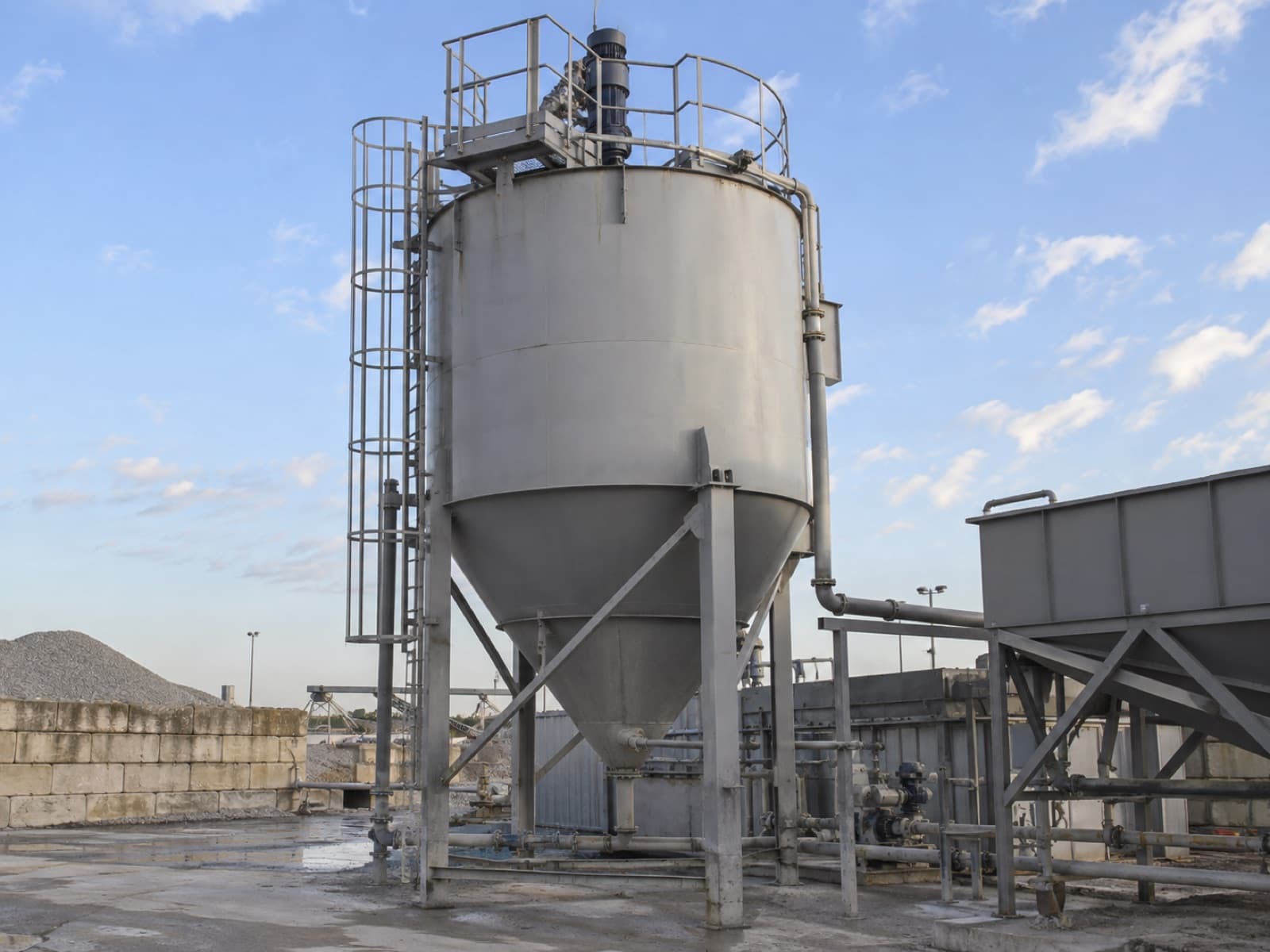
Portable steel tanks that store and recondition bentonite slurry on foundation sites.
Polyp Grabs (Orange Peel Grabs)
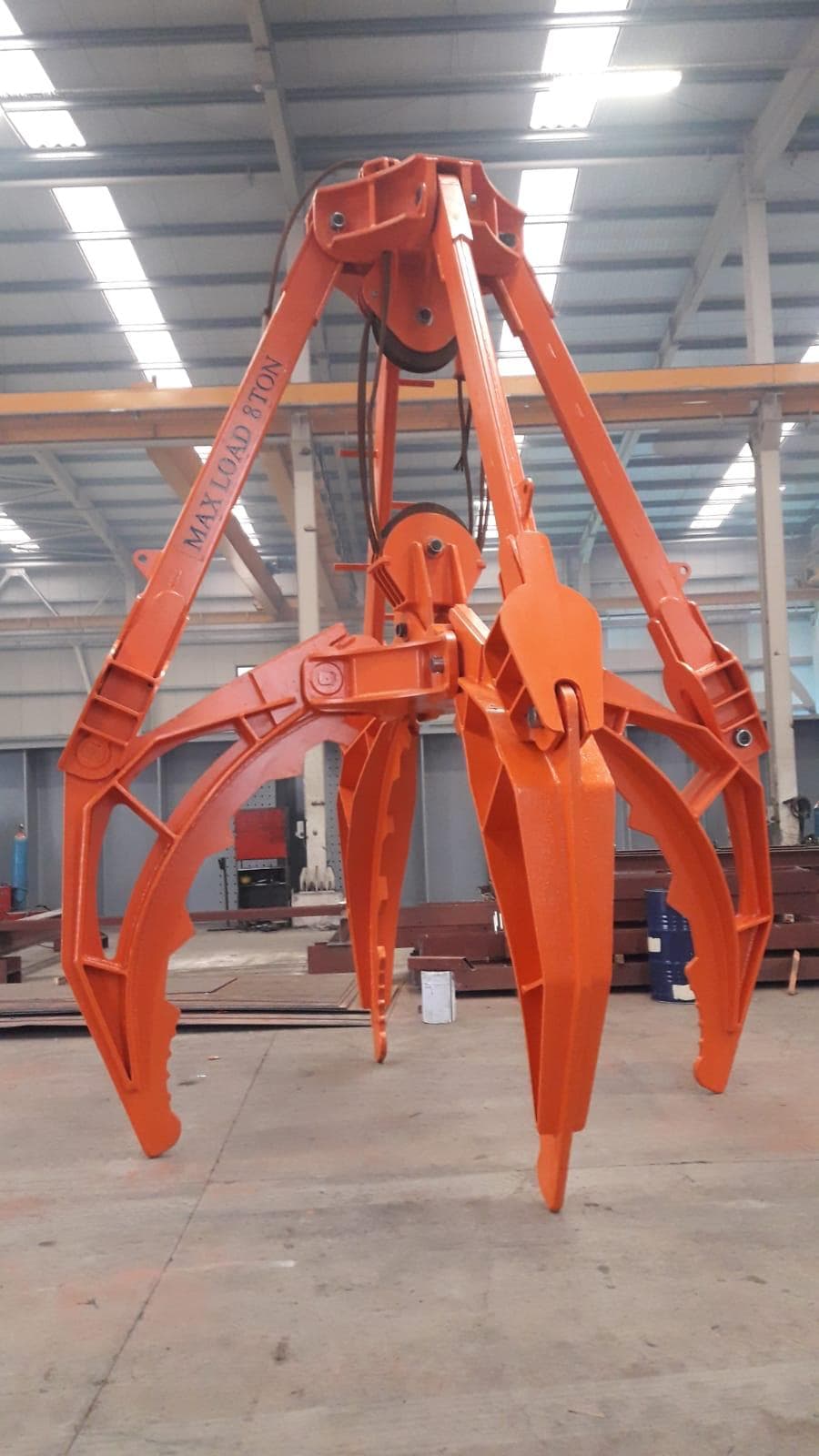
Multi-tine grabs for handling scrap, slag and bulk material.
Noise Barriers
Post-and-panel systems that reduce road and plant noise.