 Niba Çelik
Treatment Tank Fabrication
Steel tanks and basins for domestic and industrial treatment plants.
Applications
Steel treatment tanks are chosen where a concrete basin is impractical for time or space reasons, or where the unit must arrive transportable or factory-assembled. Typical buyers are process companies building treatment systems, plant operators and infrastructure contractors.
- Package domestic treatment units: equalization, aeration, settling, sludge and chlorination compartments in one body or in modular tanks.
- Industrial wastewater pre-treatment: oil separators, neutralization, coagulation-flocculation and dissolved air flotation (DAF) tanks.
- Process and chemical preparation tanks: acid, alkali and polyelectrolyte solution tanks, bodies with mixer connections.
- Sludge thickening and storage: conical or sloped-bottom sludge tanks, buffer volumes ahead of dewatering.
- Water storage and balancing: clean water, recovered water and fire water reserve tanks.
This page is not about designing the treatment system but about turning that design into a steel body. Compartment geometry, nozzle list and flow diagram come from the process engineer; we make them into a tight, transportable, maintainable tank.
Advantages and limits
Compared with a concrete basin, a steel tank is built under controlled workshop conditions and reaches site largely finished. There is no formwork, reinforcement or curing on site; nozzles, ladders and platforms are welded in the workshop; tightness is tested before shipping. The tank can later be dismantled and moved.
The other side: at very large volumes, transport limits force split shipment and site welding, and beyond that point a concrete basin or a site-bolted panel tank can become more economical. A carbon steel body is open to corrosion once the lining is damaged, so periodic lining inspection becomes the operator's responsibility. For fluids with persistently high chlorides or low pH, stainless steel or a plastic tank is the better answer.
Engineering approach
In an atmospheric treatment tank the first sizing input is hydrostatic pressure: liquid height and fluid density produce the highest stress in the lowest plate course, so plate thickness and the spacing of horizontal and vertical stiffeners are graded with height. Flat walls in rectangular tanks bend and need markedly more stiffening than a cylindrical shell; the cylinder carries the same volume with less steel, but layout and compartmenting are easier in a rectangle.
Other inputs: fluid properties (pH, chlorides, temperature, solids, solvents) that decide material and lining; equipment loads from mixers, blowers and pumps acting locally on walls or platforms; baffle walls that see one-sided pressure when a neighboring compartment is emptied; lifting and transport of the empty tank, which size the lugs and skid; and the bearing surface (full contact, legs or a concrete plinth), which sets the floor stiffening. Steel members follow Eurocode 3 (EN 1993) and welded fabrication the EN 1090 execution-class approach, with the class stated in the project.
Project stages
- Inputs: process flow diagram or layout, volume, number of compartments, nozzle list (size, type, orientation, level), fluid data and site conditions.
- Shop drawings and approval: plate developments, stiffener plan, nozzle layout and coating specification; production reads only the approved drawing.
- Cutting and forming: plasma or laser cutting, rolling of cylindrical shells, segmented conical bottoms.
- Welded assembly: shell, floor, baffles and stiffeners tacked, checked and fully welded; nozzles and flanges set to level.
- Tightness test: water fill with visual and hold-time inspection; low-pressure air and soap test on closed bodies; non-destructive testing by an external body where specified.
- Surface preparation and coating: blasting, primer and coating system; process-compatible inside, atmospheric protection outside.
- Shipping and site: by truck or low-bed; split shipments get planned site welding and coating repair. Installation, commissioning support and shipping terms are agreed per project.
Materials and surface treatment
Shell plate is S235 or S355; S355 means thinner plate or wider stiffener spacing for the same load. Stainless steel is 304, or 316L in chloride environments.
| Criterion | Carbon steel with internal lining | Stainless steel (304 or 316L) |
|---|---|---|
| Material cost | Low | High |
| Corrosion resistance | Depends on the lining; local attack where it is damaged | From the material itself; 316L needed with chlorides |
| Welding and fabrication | Standard methods | Separate workshop discipline, no carbon steel contact, passivation |
| Maintenance | Periodic lining inspection and renewal | Low; surface cleaning suffices |
| Typical use | Domestic wastewater, equalization, settling, sludge | Chemical dosing, acidic or chloride fluids, hygienic processes |
| Weight | Usually heavier for the same volume | Thinner plate possible without corrosion allowance |
Outside, blasting followed by a zinc phosphate or epoxy primer and polyurethane top coat is typical; coastal or chemical atmospheres call for a heavier system by EN ISO 12944 corrosivity category. Inside, solvent-free thick-film epoxy is the common solution for wastewater and sludge compartments; clean water tanks require a lining approved for drinking water contact. Coating thickness and coats follow the paint manufacturer's data sheet and are recorded by wet and dry film measurement.
Standards
Welded steel fabrication to EN 1090 and EN ISO 3834; materials to EN 10025 and the relevant EN stainless steel standards; external coatings by EN ISO 12944. The treatment plant itself falls under the applicable water pollution regulations, and the volumes and retention times the tank must provide are set by the process designer within that framework. What a particular tank must satisfy is written in the approved design and the applicable regulation; the summary above is a map, not the rulebook.
What drives the price
- Volume, geometry (cylindrical or rectangular) and number of compartments
- Material class: S235, S355 or stainless 304 or 316L
- Plate thickness and stiffener density (both rise with liquid height)
- Number of nozzles, flanges, manways, ladders, platforms and railings
- Internal lining system and thickness; external paint system
- Test and inspection scope (water test, non-destructive testing, third party)
- Shipping distance, transport limits and split shipment
- Whether site welding, installation and commissioning support are in scope
To have a tank quoted, the process flow diagram or tank layout, volume and compartment data, nozzle list, fluid description and delivery address are enough; we ask for anything missing.
Frequently asked questions
Carbon steel or stainless?
Carbon steel with a suitable lining is the economical choice for most treatment processes; stainless steel is selected for corrosive or hygienic processes. The decision follows the process engineer's fluid and temperature data.
Rectangular or cylindrical?
A cylindrical shell carries the same volume with far less stiffening; a rectangular tank is easier to compartment and to fit into a layout. Rectangular tanks therefore need noticeably more external stiffeners.
How is tightness checked?
The tank is filled with water and held while the seams are inspected visually and the level is monitored. Closed bodies can also get a low-pressure air and soap test, and non-destructive testing is added when the project specifies it.
Industrial Fabrication
Related services
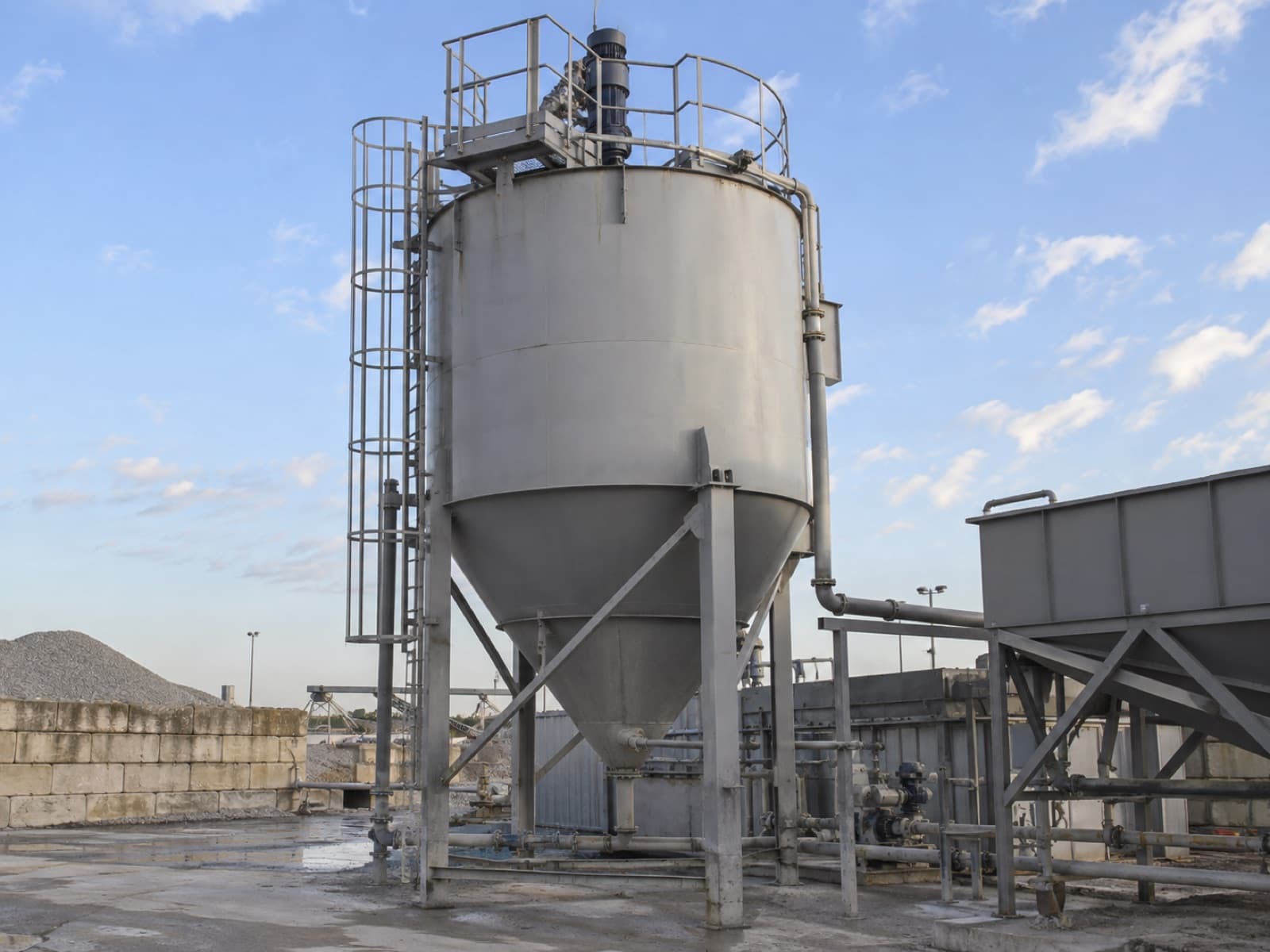
Bentonite Tank Fabrication
Portable steel tanks that store and recondition bentonite slurry on foundation sites.
Steel Concrete Formwork
Reusable steel molds for precast producers and contractors.
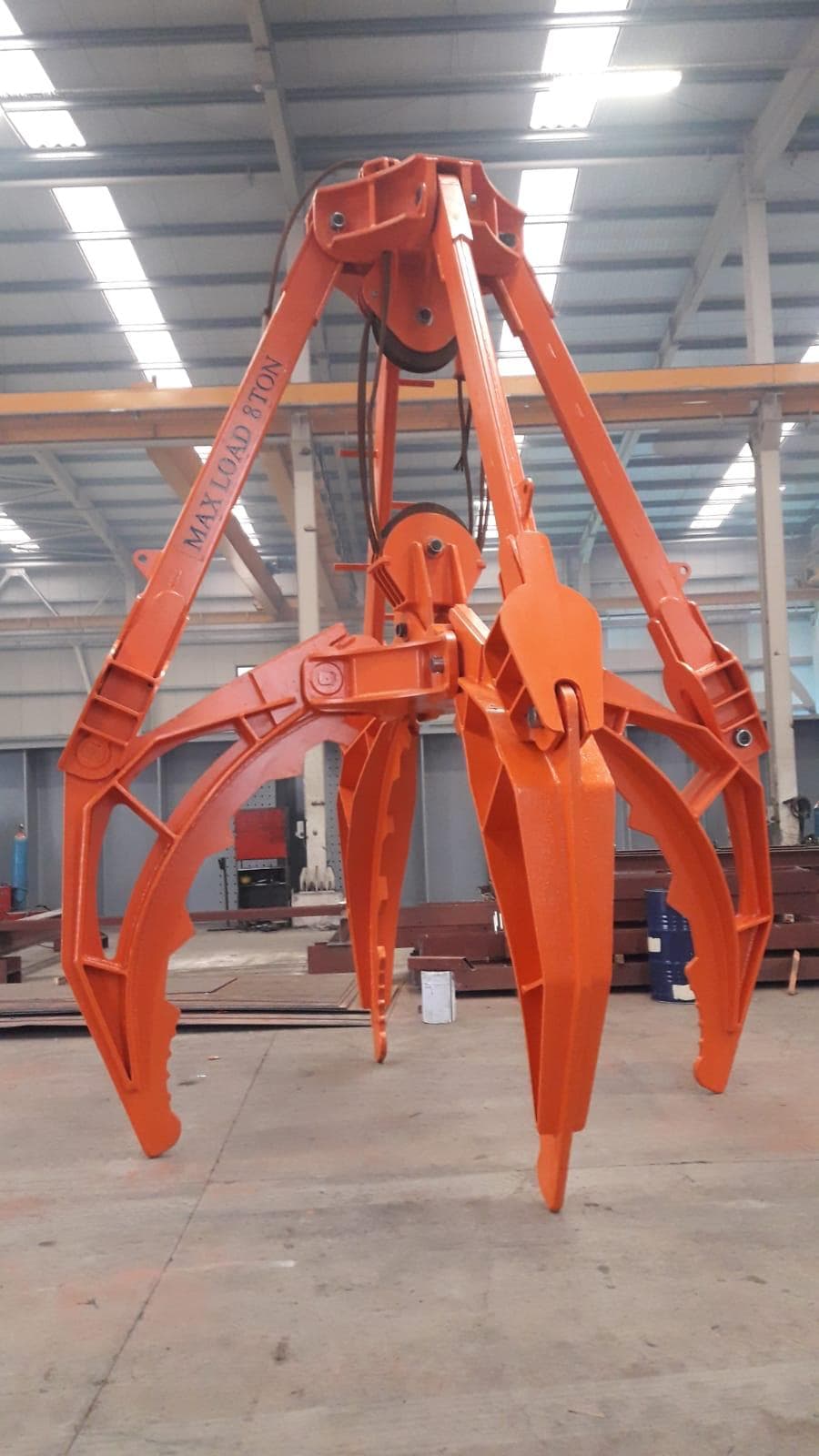
Polyp Grabs (Orange Peel Grabs)
Multi-tine grabs for handling scrap, slag and bulk material.
Noise Barriers
Post-and-panel systems that reduce road and plant noise.