 Niba Çelik
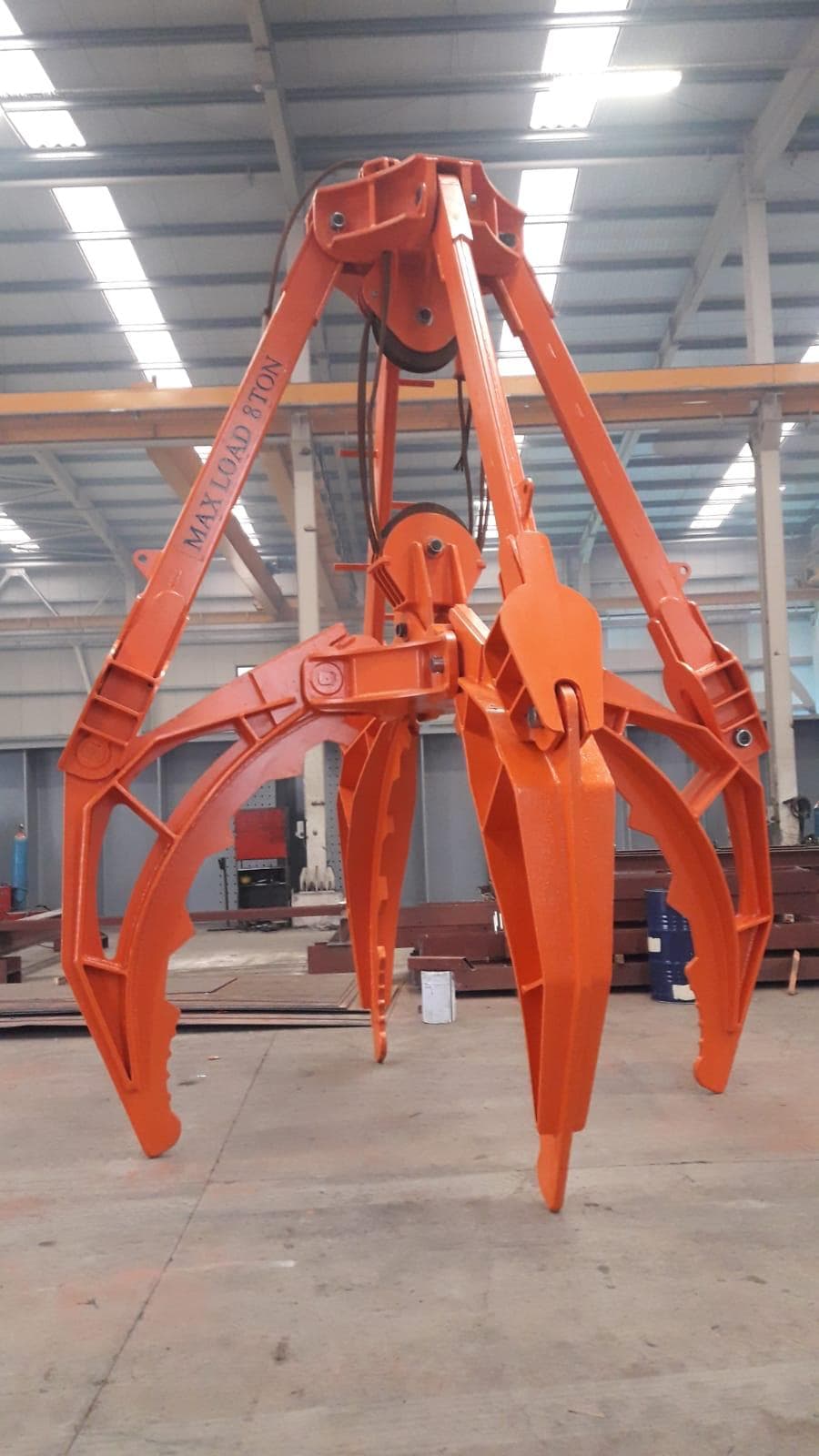
Polyp Grabs (Orange Peel Grabs)
Multi-tine grabs for handling scrap, slag and bulk material.
Applications
A polyp grab, known in English-speaking markets as an orange peel grab, is a multi-tine handling attachment that grips irregular or bulk material from several points at once. The rope-operated type is treated as a lifting accessory; the hydraulic type is interchangeable equipment mounted on a machine. Users are scrap and recycling yards, steelworks and foundries, ports and shipyards, waste plants, and mining and aggregate sites.
- Scrap yards and steelworks charging bays: picking mixed scrap from the pile into containers or charging baskets.
- Slag and foundry waste: heavy grabs with wear plate for hot, abrasive material.
- Ports and ship unloading: coal, clinker, scrap and bulk ore from hold to quay.
- Waste and biomass plants: closed or semi-closed tines for light, bulky, non-uniform material.
The material shapes the grab: open, pointed tines for scrap, interlocking semi-closed tines for bulk material, closed tines with wear lining for sand and slag.
Advantages and limits
Against a classic two-shell clamshell, a polyp grab grips an irregular pile at several points; each tine settles onto the material separately and the load gathers at the center. On the hydraulic type, independent tine movement gives controlled gripping in tight spaces and mixed scrap. On the rope type there is no hydraulic circuit on the grab, so fewer failure points in hot and dusty conditions.
Each grab has a downside. Its own weight comes off the crane capacity; a heavily lined grab carries less payload per cycle. Fine, powdery material leaks between the tines, and a closed-tine or clamshell grab is the better tool for it. A hydraulic grab depends on the machine's auxiliary hydraulic outlet and a rope grab on a two-drum winch; if the machine does not fit, it is the machine and not the grab type that changes. For hot slag, paint and hydraulic hoses are selected for temperature; standard equipment is not used.
Engineering approach
Sizing starts with the machine. The grab's empty weight is subtracted from the crane's or excavator's lifting capacity at working reach; the remaining payload divided by the material's bulk density gives the volume. A scrap grab and a slag grab of the same volume weigh differently because wear lining and tine thickness follow the material.
Inputs that shape the design: tine count and opening diameter (few wide tines for light bulky material, many narrow tines for heavy small pieces; closed diameter must clear the container mouth); closing force, from cylinder bore and pressure on the hydraulic type or sheave ratio and rope pull on the rope type; cycle count, with pivot pins, bushings and body welds assessed for fatigue and the pin-bushing pair chosen for the maintenance interval; impact and wear, with tine tips and inner faces protected by wear plate graded to material hardness and temperature; mounting via crane hook, rotator or excavator quick coupler, each with its own load path and pin size; and the hydraulic circuit (flow, pressure, double-acting cylinders, hose routing and burst protection), with a power pack option where the machine lacks an auxiliary line. Steel sections are checked to the applicable design rules, lifting accessories following the relevant EN standards, and welded fabrication to EN 1090.
Project stages
- Inputs: machine model, capacity at reach, rope arrangement or hydraulic outlet data, material and bulk density, cycle intensity, mounting dimensions.
- Design and approval: tine geometry, body and pivot layout, hydraulic or rope schematic, wear-plate plan; fabrication follows the approved drawing.
- Cutting and forming: body and tine plates cut by plasma or laser; tine profiles bent or built up in segments.
- Machining: pin holes, bushing seats and flange faces machined; axis parallelism checked.
- Welded assembly: body and tines welded, wear plates fitted; pins and bushings installed, cylinders and hoses connected.
- Surface treatment and trial: blasting, primer and top coat; tines opened and closed empty to check motion and tightness. Loaded trial scope is agreed per project.
- Shipping: by truck or trailer; mounting and commissioning support and shipping terms are agreed per project.
Materials and surface treatment
Body and tine skeleton are S355 to EN 10025 or a high-strength fine-grain structural steel; higher strength means a lighter grab for the same capacity, and so more payload per cycle. Tine tips and inner wear plates are 400 or 450 HB wear plate, with a heat-resistant grade for hot slag. Pivot pins are heat-treated alloy steel; bushings bronze or hardened steel with grease channels.
| Criterion | Rope-operated (mechanical) polyp grab | Hydraulic polyp grab |
|---|---|---|
| Power source | Crane closing and holding ropes | Excavator or crane hydraulic line |
| Machine requirement | Two-drum or two-rope crane | Auxiliary hydraulic outlet with adequate flow and pressure |
| Tine movement | Tines close together | Tines close independently, controlled grip |
| Equipment on the grab | Sheave blocks, rope guides | Cylinders, hoses, usually a rotator |
| Maintenance points | Sheave bearings, rope wear, pins | Cylinder seals, hoses, pins |
| Hot and dusty conditions | Suitable, no hydraulics | Hoses and seals selected for temperature |
| Typical use | Port cranes, steelworks overhead cranes | Excavators, material handlers |
The finish is blasting followed by epoxy primer and polyurethane top coat; tines and wear faces are left unpainted and polish in service. Hot-dip galvanizing is unsuitable here: pivot tolerances and wear plate do not tolerate the bath.
Standards
The rope type is treated as a lifting accessory and the hydraulic type as interchangeable equipment; design and marking follow the relevant EN standards for lifting accessories and the applicable machinery safety regulation. Steel design follows Eurocode 3 (EN 1993), welded fabrication EN 1090, materials EN 10025. Which technical file and inspection documents are provided by whom is fixed in the contract. Treat this as an orientation, not a compliance list: the contract and the applicable regulation decide what is required for a given application.
What drives the price
- Volume, tine count, open and closed diameter
- Type: rope or hydraulic; rotator and hydraulic equipment scope
- Wear-plate grade and extent (tine tips only or full inner lining)
- Body steel grade and the resulting weight target
- Mounting type and machine-specific adapter
- Surface treatment and color
- Shipping distance, loaded trial and commissioning support
To get a grab quoted, tell us the machine model and capacity, rope arrangement or hydraulic outlet data, the material to be handled, the target volume and the delivery address; the grab is drawn from these.
Projects
Related projects
Rope-Operated Orange Peel Grab Fabrication
İzmir
Rope-operated multi-tine orange peel grab: cut-plate tines, sheave-and-rope mechanism and replaceable pivot parts; assembled, tested and painted in the shop.
Frequently asked questions
Rope-operated or hydraulic?
A rope grab works from the crane's two-rope system and needs no power supply; a hydraulic grab is fed from the excavator or crane hydraulics and gives more controlled gripping.
What determines the price?
Capacity and number of tines, open and closed diameter, wear-plate grade, type (rope or hydraulic), mounting detail and surface treatment.
How is the grab volume chosen?
From the machine, not the material alone: the grab's own weight is subtracted from the lifting capacity at working reach, and the remaining payload divided by the bulk density of the material gives the volume.
Industrial Fabrication
Related services
Treatment Tank Fabrication
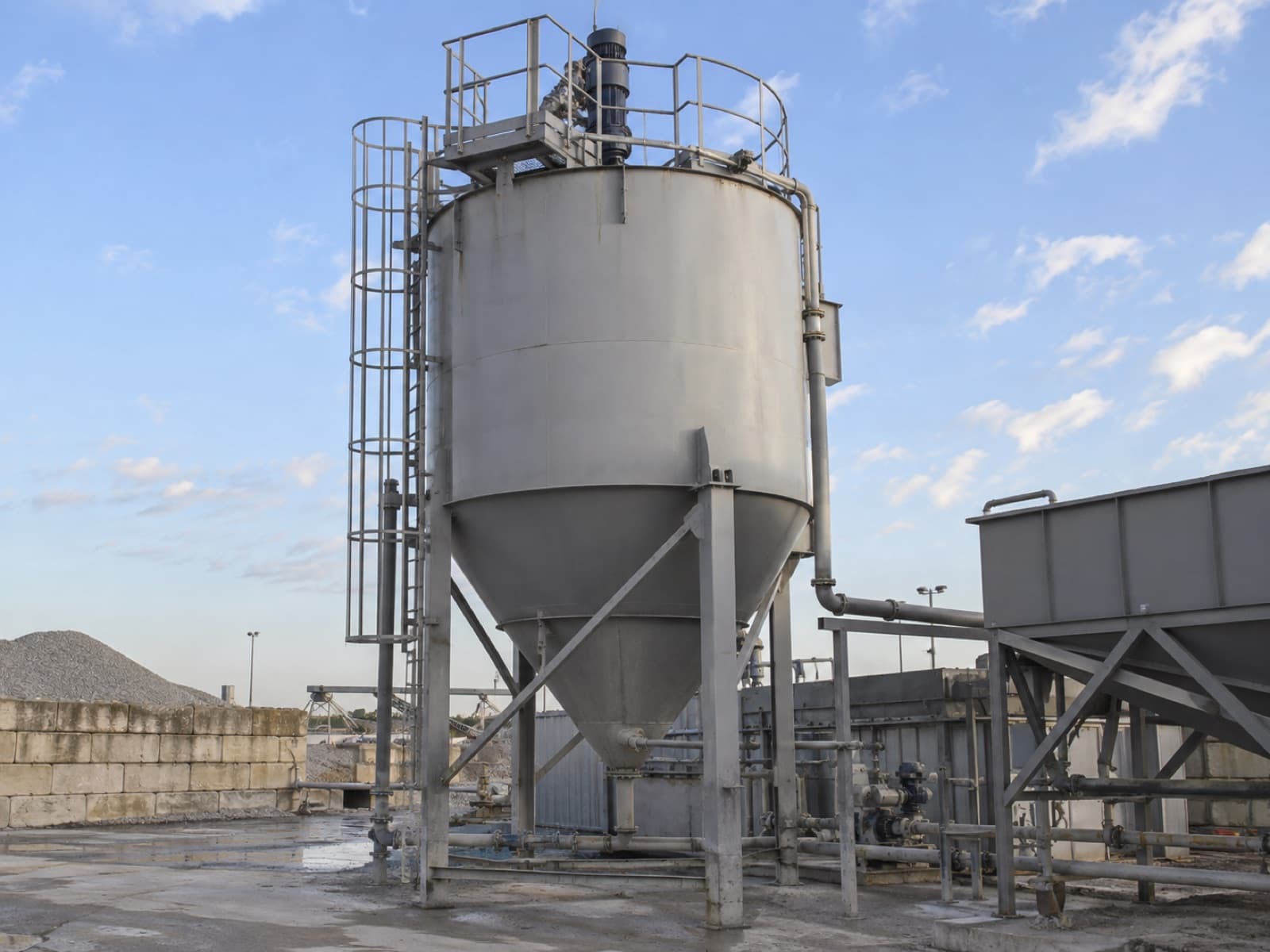
Steel tanks and basins for domestic and industrial treatment plants.
Bentonite Tank Fabrication
Portable steel tanks that store and recondition bentonite slurry on foundation sites.
Steel Concrete Formwork
Reusable steel molds for precast producers and contractors.
Noise Barriers
Post-and-panel systems that reduce road and plant noise.