 Niba Çelik
Bentonite Tank Fabrication
Portable steel tanks that store and recondition bentonite slurry on foundation sites.
Applications
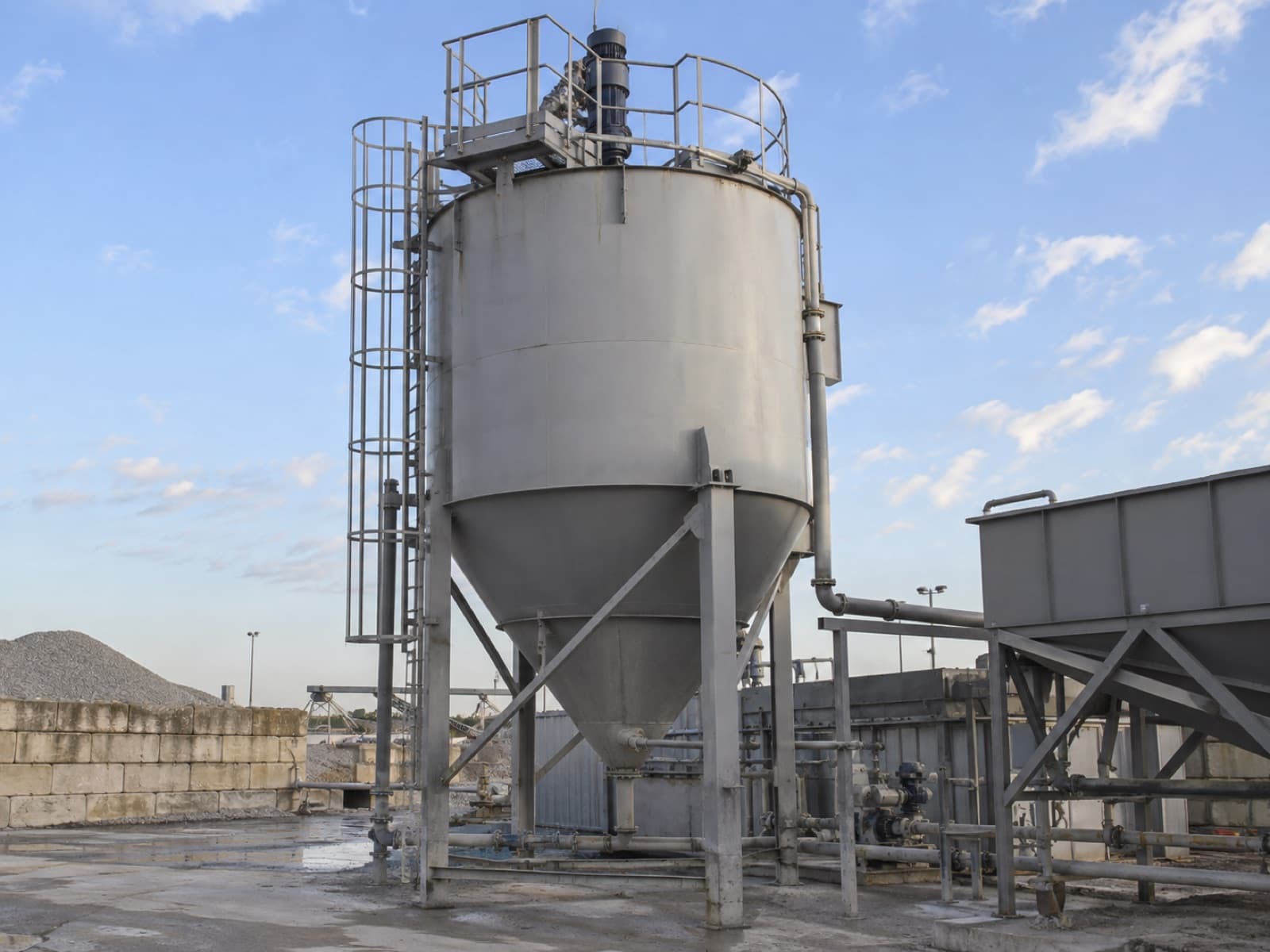
Bentonite tanks are the steel volumes in which the slurry that holds a pile bore or trench wall open is prepared, held and recovered. Buyers are foundation and geotechnical contractors, infrastructure contractors and site-equipment rental companies.
- Bored-pile sites: storage and settling tanks feeding slurry to the bore during drilling and taking it back during concreting.
- Diaphragm walls and secant piles: tank groups connected in series for the large slurry volumes of long panels.
- Tunneling and horizontal drilling: mixing tanks for the drilling fluid and buffer tanks feeding the separation unit.
- Desanding lines: compartmented tanks placed under or beside desander and desilter units, keeping clean and dirty slurry apart.
- Polymer slurry systems: the same tank layout with a different mixing arrangement where polymer replaces bentonite.
A tank works on one site for months, is then dismantled and goes to the next. That is the whole design idea: a transportable, re-erectable body that can be maintained under site conditions.
Advantages and limits
A steel bentonite tank beats an excavated earth pit or a temporary concrete basin on three counts: the volume is exact and there is no seepage; the tank arrives by truck and starts work without a set-up wait; and when the job is done it moves to the next project. Baffle walls and overflow lines start the settling and rough separation of the slurry inside the tank.
These benefits have a price. A single tank is limited by road transport dimensions, so large sites split the volume across several tanks and plan hose or pipe connections between them. On uneven ground the floor is only partly supported; leveling the bearing area is the site's responsibility. For a plant that will stay in one place for a very long time and never move, a concrete basin can be more economical.
Engineering approach
The sizing input is the hydrostatic pressure of the slurry; because its density is above that of water, the wall load at a given height exceeds that of a water tank. A rectangular body is preferred because tanks line up on site and fit on a truck, but flat walls bend, so horizontal and vertical stiffeners wrap the shell at set intervals. Plate thickness and stiffener spacing follow the full-tank load; the skid follows the scenario of the empty tank being lifted by crane and tied down on the truck.
Other decisions: compartmenting with an overflow wall between the dirty inlet side and the clean draw-off side, its height set by the settling logic; floor geometry with a slope or a bottom drain valve so settled sand can be discharged, and a manway or open top for full cleaning; connections for pump suction and discharge, desander feed and return, overflow and drain, matched to hose clamps or flanges; and access by ladder, top platform and railing, which on open-top tanks is a site-safety requirement. Steel members follow Eurocode 3 (EN 1993) and welded fabrication EN 1090; apart from self-weight and slurry, the main extra loads are lifting and equipment.
Project stages
- Requirement: total slurry volume, number of tanks, compartment layout, existing pump and hose connection sizes, site layout and truck access.
- Shop drawings and approval: shell development, stiffener plan, nozzle and lug positions, coating description; no plate is cut before your approval.
- Cutting and bending: plasma cutting, edge bends and stiffener lengths.
- Welded assembly: floor, walls, baffles and stiffeners tacked, checked and fully welded; lugs and legs welded to the skid.
- Water test: the tank is filled and held; seams are inspected visually and the level is monitored.
- Surface treatment: blasting, epoxy primer, a colored top coat outside for site visibility, thick-film epoxy inside.
- Shipping: by truck or trailer; unloading, connection scope and shipping terms are agreed per project.
Materials and surface treatment
Shell and stiffeners are S235 or S355 structural steel. S355 means thinner plate and a lighter tank for the same load, and on equipment that travels from site to site, weight goes straight into transport and crane cost. Lugs and pins are designed with a clear lifting direction and load marking.
| Tank duty | Internal fittings | Floor and drain | Key requirement |
|---|---|---|---|
| Mixing tank | Mixer mount or jet-mixing nozzle, bag dump hopper | Flat floor, bottom drain | Homogeneous slurry, local stiffening for mixer load |
| Storage tank | Suction and return nozzles, level gauge | Flat or slightly sloped | Volume and tightness |
| Settling tank | Baffled compartments, dirty inlet and clean outlet | Sloped floor, sand drain valve | Discharge of settled sand |
Protection addresses two environments. The outside faces site weather and mechanical knocks: blasting, epoxy primer and a polyurethane or alkyd top coat, usually in a conspicuous color. The inside contacts a mildly alkaline, abrasive slurry: thick-film epoxy primer slows corrosion and eases cleaning. Hot-dip galvanizing is not typical for this product; a welded closed body and later site welding do not suit the bath. Coating selection follows the EN ISO 12944 approach.
Standards
Welded fabrication to EN 1090, materials to EN 10025. Slurry properties such as density, viscosity and sand content are controlled under the geotechnical execution standards and the project specification; the tank does not set those values, it provides the volume in which they are achieved. Site-specific requirements are set by the project specification and the applicable regulation rather than by this general description.
What drives the price
- Total volume and number of tanks; splitting for transport
- Material grade (S235 or S355) and plate thickness
- Internal layout: baffles, overflow wall, sloped floor
- Number of nozzles, valves, flanges and hose connections
- Ladders, platforms and railings
- Internal and external coating systems
- Shipping distance and crane requirement for unloading
- Whether site connection and commissioning support are in scope
To have tanks quoted, the required total volume, number of tanks, existing pump and hose connection sizes, a layout sketch if available and the delivery address are enough; the remaining details are settled together.
Projects
Related projects
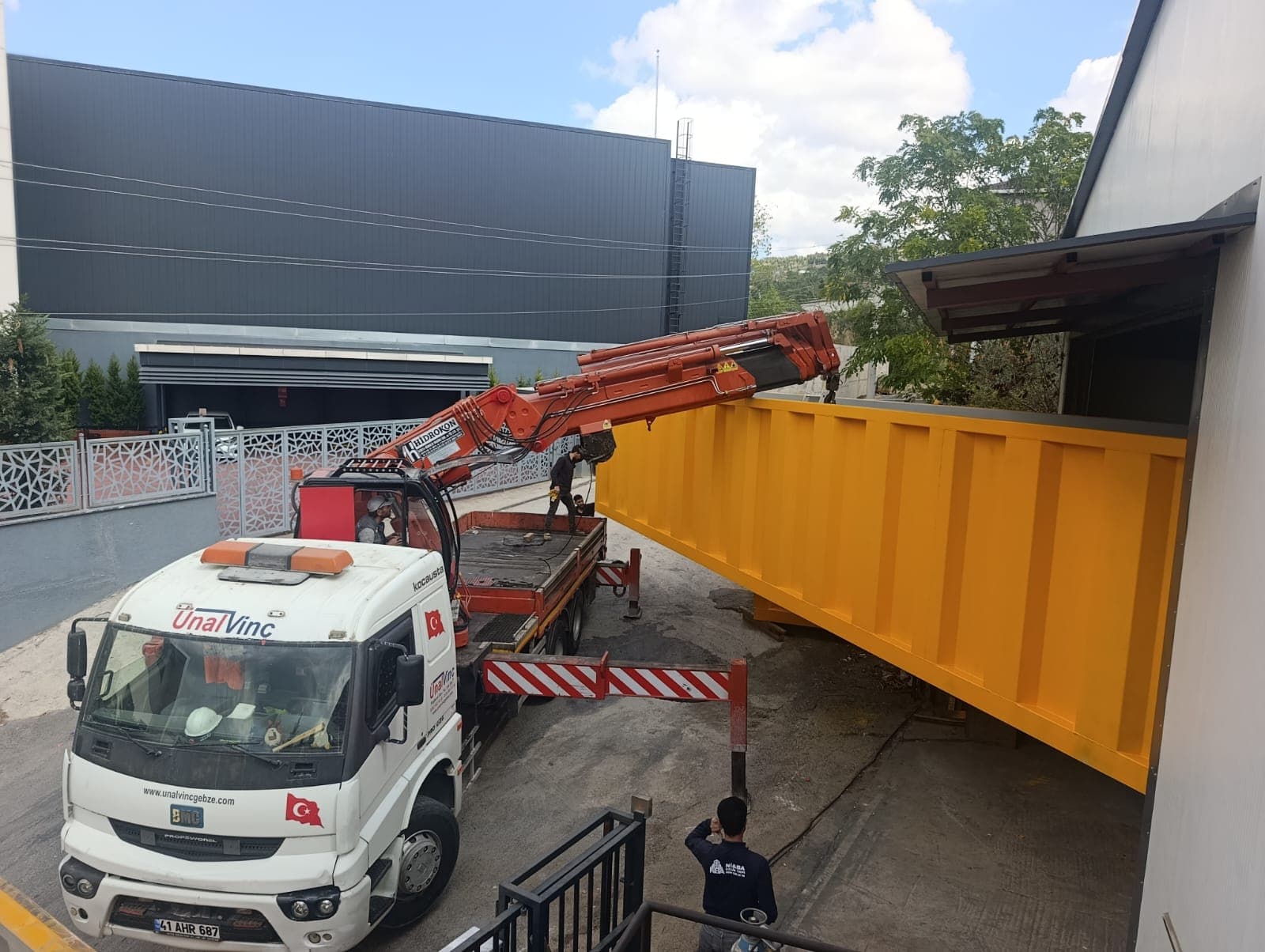
Bentonite Tank Fabrication and Delivery
Istanbul
Fabrication and delivery of a portable steel bentonite tank that moves from site to site.
Frequently asked questions
What is a bentonite tank used for?
Bentonite slurry keeps bored-pile and diaphragm-wall excavations stable. These tanks mix and store the slurry and let used slurry settle so it can be reused.
How are the tanks transported?
Tanks are sized to truck or trailer limits and built with lifting lugs and legs so they can move from site to site.
Why are the tanks not galvanized?
A welded, closed body with later site welding does not suit a galvanizing bath. The usual protection is blasting, epoxy primer and a high-visibility top coat outside, with thick-film epoxy inside.
Industrial Fabrication
Related services
Treatment Tank Fabrication
Steel tanks and basins for domestic and industrial treatment plants.
Steel Concrete Formwork
Reusable steel molds for precast producers and contractors.
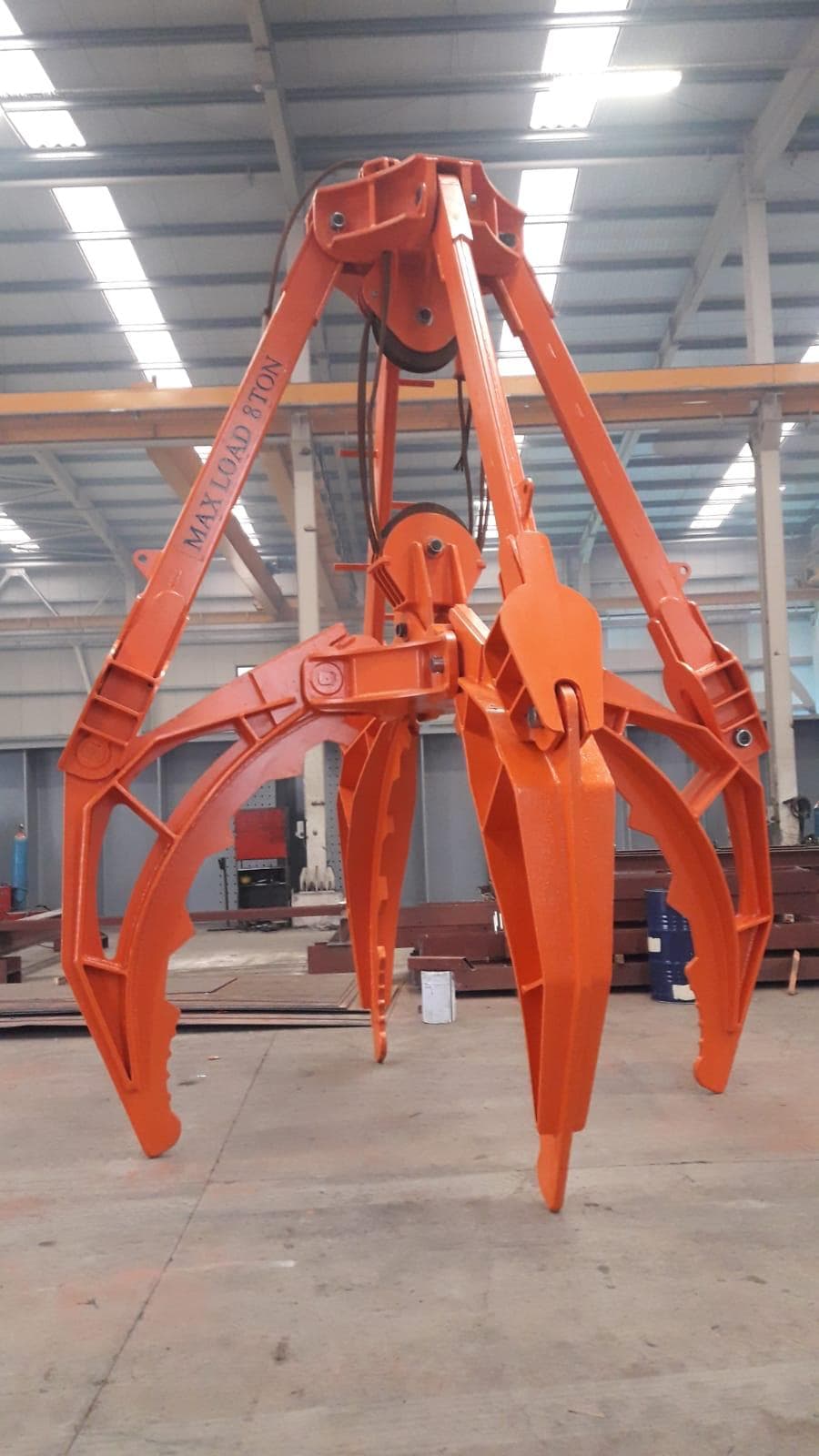
Polyp Grabs (Orange Peel Grabs)
Multi-tine grabs for handling scrap, slag and bulk material.
Noise Barriers
Post-and-panel systems that reduce road and plant noise.