 Niba Çelik
Steel Bridges
Girders, cross beams, deck parts and railings for pedestrian, pipe-rack and vehicle bridges.
Applications
The steel bridge service covers the load-bearing steel that crosses a span (main girders, cross beams, deck, railings and bearing details), fabricated to an approved design and erected or shipped. Buyers are municipalities and infrastructure contractors, industrial, energy and petrochemical project offices, and firms that subcontract the steel package on road and rail projects.
- Pedestrian overpasses: crossings over roads, railways or streams, with ramps, stairs and lift tower structures.
- In-plant pipe and cable bridges: lattice or girder bridges carrying pipelines, cable trays and a maintenance walkway between units.
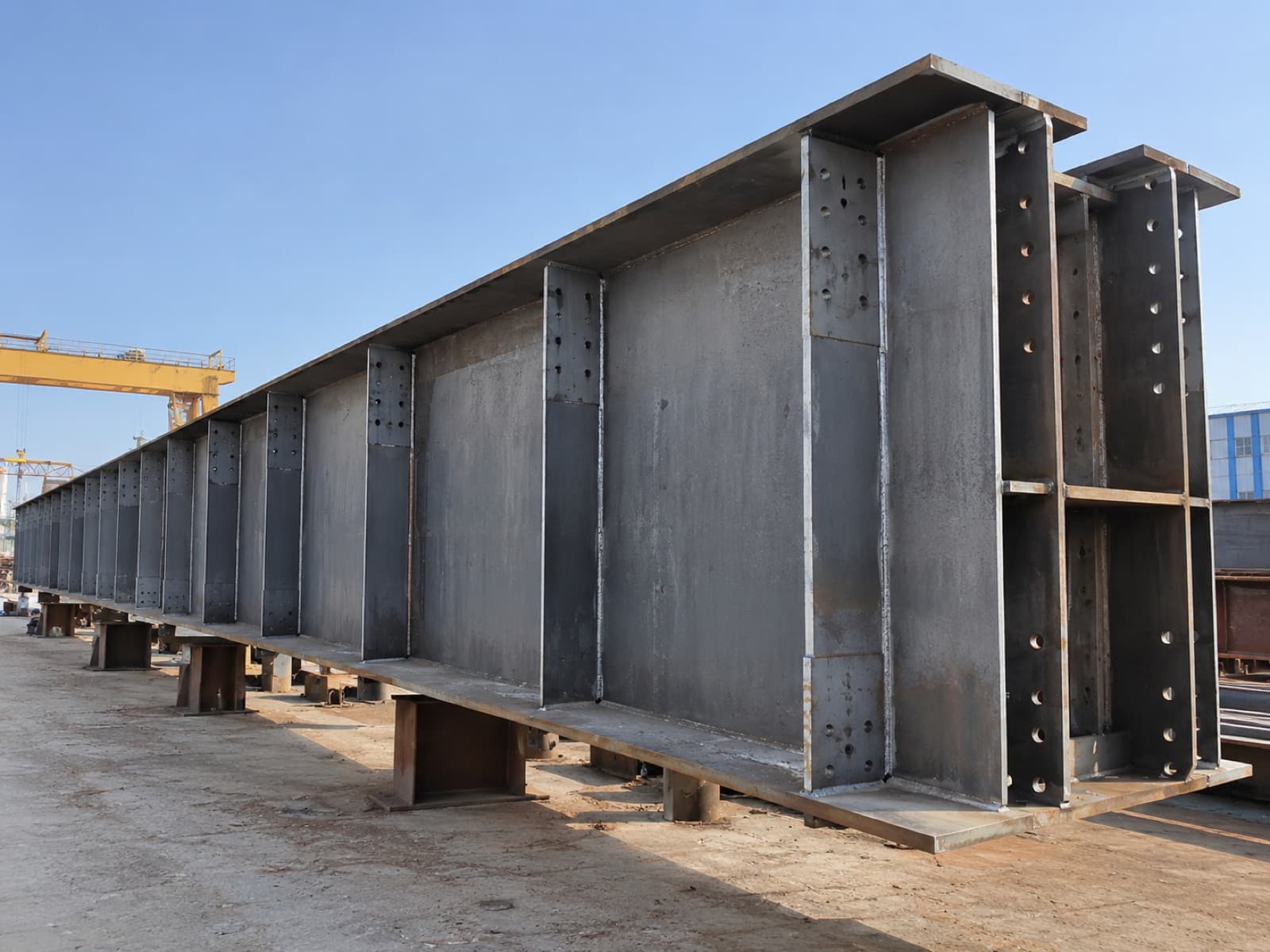
- Girder and deck elements: welded I and box girders, cross beams and deck plate for road and rail bridges.
- In-plant crossings and platform bridges: maintenance links between roofs or buildings, conveyor bridges, crossings over tank farms.
Bridge type and load decide everything from section type to inspection scope; a footbridge and a pipe bridge of the same span go to different systems.
Advantages and limits
Steel is chosen for bridges because of span and erection speed. Long spans are crossed with few supports; the girder is pre-assembled on the ground and the road or plant below is closed only for the lift. Low self-weight reduces bearing and foundation loads, and later widening, lifting or relocation is possible. A lattice bridge serves as both structure and pipe support.
Against that, steel bridges are fatigue-sensitive: under repeated traffic or rail loads, weld detail and joint geometry govern, so inspection scope and welding quality demands are heavier than in buildings. The structure sits permanently outdoors under corrosion load, with a multi-coat system and periodic maintenance. On footbridges, vibration and comfort are design criteria, and slender systems may need extra damping or stiffness. For short spans under heavy traffic, prestressed concrete or a composite deck can be more economical.
Engineering approach
The bridge design comes from the bridge engineer; shop drawings, weld plan and erection method are derived from it. Loads are self-weight, pedestrian or traffic load, wind, temperature and seismic action; steel section, connection and fatigue design follow Eurocode 3 (EN 1993), with the road or rail authority's specification applying on top. The inputs that shape fabrication: span and support arrangement (simple or continuous), load type (vibration on footbridges, thermal forces on pipe bridges, axle loads and fatigue on vehicle bridges), section type, weld detail and fatigue category, part length and splice positions set by transport and crane limits, and the camber built into the girder so it reads straight under permanent load.
| Criterion | Lattice girder | Welded I girder | Box girder |
|---|---|---|---|
| Weight | Light | Medium | Heavy |
| Fabrication labor | Many nodes, high | Straight seams, medium | Closed section, internal diaphragms, high |
| Inspection access | Open, easy | Open, easy | Limited to internal seams |
| Torsional stiffness | Low | Low | High |
| Pipe and cable support | Hung directly from nodes | Extra brackets needed | Extra brackets needed |
| Typical use | Pipe and cable bridges, long spans | Footbridges and vehicle bridges | Curved alignments, wide decks |
Project stages
- Design review and inputs: approved bridge design, site survey and bearing levels, transport route, crane set-up area and closure conditions.
- Shop drawings and approval: part list, weld plan, splice details, camber and erection method, approved by the project engineer.
- Fabrication: plate cutting, assembly of built-up sections, straightening, welding of cross beams and diaphragms; dimensional, camber and flatness checks, trial assembly in the workshop if specified.
- Weld inspection: visual inspection during fabrication; non-destructive testing by an independent laboratory to the plan, reports filed.
- Surface treatment: blasting, then a multi-coat paint system or galvanizing; splice and site-weld areas are completed after erection.
- Transport and erection: parts loaded to transport limits; ground pre-assembly, single or tandem crane lift, setting on bearings, bolted or site-welded splices, railings and deck. Installation scope and method are agreed per project.
- Handover: geometry, bearing seating, bolt torque and coating checked; fabrication and inspection file handed over.
Materials and surface treatment
Main girders and cross beams are commonly S355 to EN 10025, with a suitable sub-grade where low-temperature toughness is required. Deck plate, railings and walkways use S235 or S355; the walking surface may be checker plate, grating or a composite deck. Bolts follow the project class, with faying-surface preparation and tightening method specified for preloaded joints. Mill documents are filed.
A bridge is always outdoors and often exposed to road salt or an industrial atmosphere, so the coating system is chosen by EN ISO 12944 corrosivity category and is multi-coat: a zinc-rich primer, an intermediate coat and a polyurethane top coat is a common sequence. Lattice bridges and small parts suit hot-dip galvanizing (EN ISO 1461) or duplex paint over galvanizing; large built-up girders exceed the bath size and go to a paint system. Pockets that can hold water and closed sections are detailed with drain holes.
Standards
Eurocode 3 (EN 1993) for steel section, connection and fatigue design, plus the applicable national bridge and seismic codes and the owner's technical specification; EN 1090 for fabrication and EN ISO 3834 for welding quality, with the execution class set by the project engineer. Approvals, acceptance and permits from the road, rail or municipal authority rest with the owner. On a bridge the owner's specification governs; this summary only names the standards it typically invokes.
What drives the price
- Span, bridge type and load carried
- Section type and total steel weight; number of built-up sections and internal diaphragms
- Weld inspection scope and density of fatigue-critical details
- Paint system coats; galvanizing or duplex
- Part length, number of splices and transport route
- Erection conditions: crane capacity and set-up area, road or plant closure permits, night work
- Railings, deck, lighting provisions, ramps and stairs
- Who covers bearings, piers and foundations
To price the steel package, send the bridge design or the span, load type and alignment, the site location and access, the required coating system, and whether erection is to be included.
Projects
Related projects
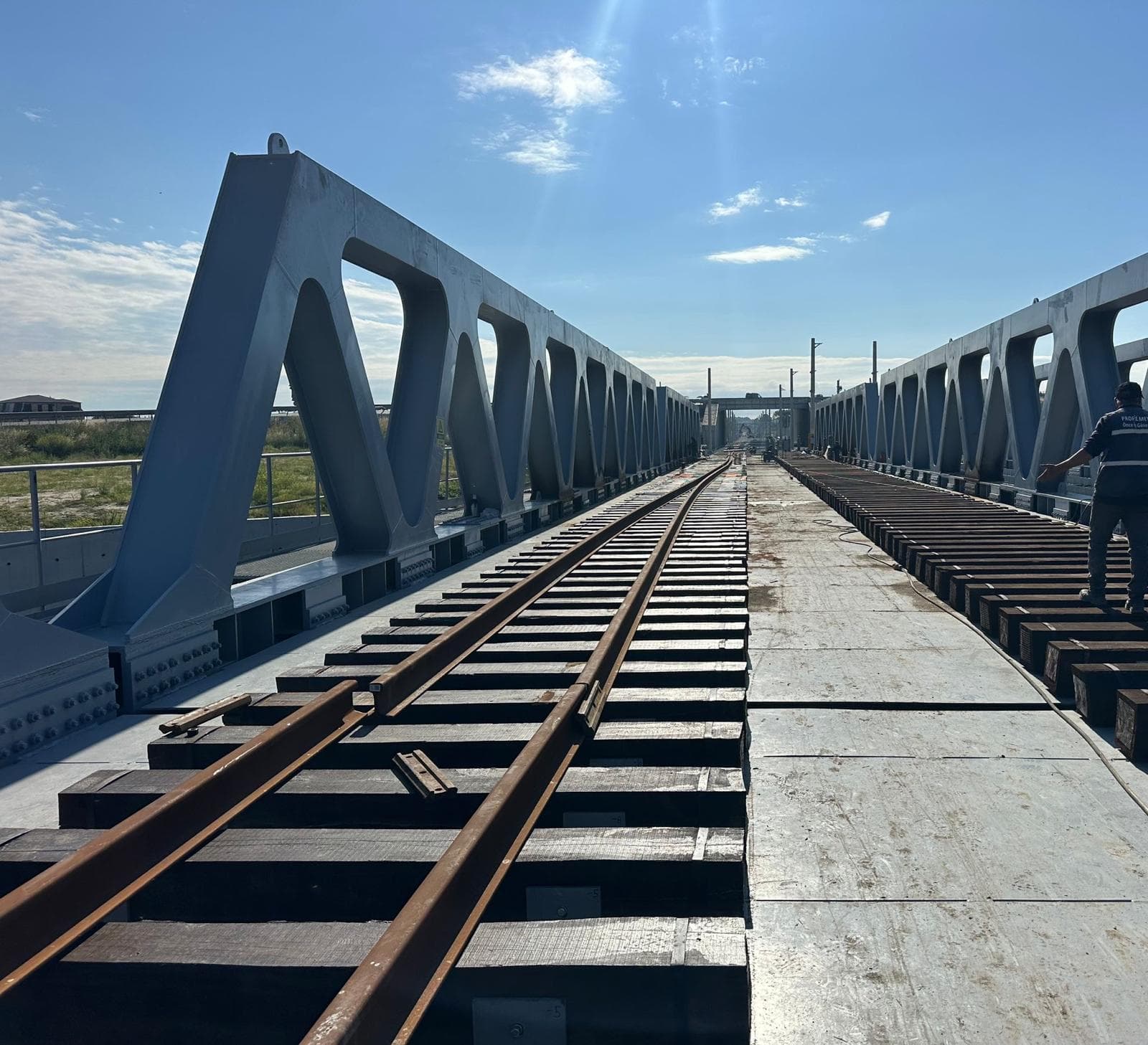
Steel Bridge Girder Fabrication and Erection
Istanbul
Fabrication, shipment and crane erection of steel bridge girders made to an approved design.
Frequently asked questions
Which bridge types do you fabricate?
Pedestrian overpasses, in-plant pipe and cable bridges, welded plate girders and deck elements for road and rail bridges. The design comes from the bridge engineer; we fabricate to it and erection is agreed per project.
Why is weld inspection heavier on a bridge than on a building?
Vehicle and rail bridges carry repeated loads, so weld detail and joint geometry govern fatigue life. The inspection plan follows the fatigue categories written on the drawings.
How are long girders transported?
Girders are split at low-stress points into sections that fit road transport limits and crane capacity, then joined on site by bolting or site welding as the design specifies.
Steel Construction
Related services
Steel Roof Fabrication
Trusses, purlins and connection parts for building and warehouse roofs.
Steel Buildings
Load-bearing steel frames for warehouses, workshops, mezzanine floors and equipment platforms.
Facade Steel
The steel sub-frame behind facade cladding and steel elements attached to the facade.
Panel Cladding
Sandwich panel or trapezoidal sheet cladding over a steel frame.
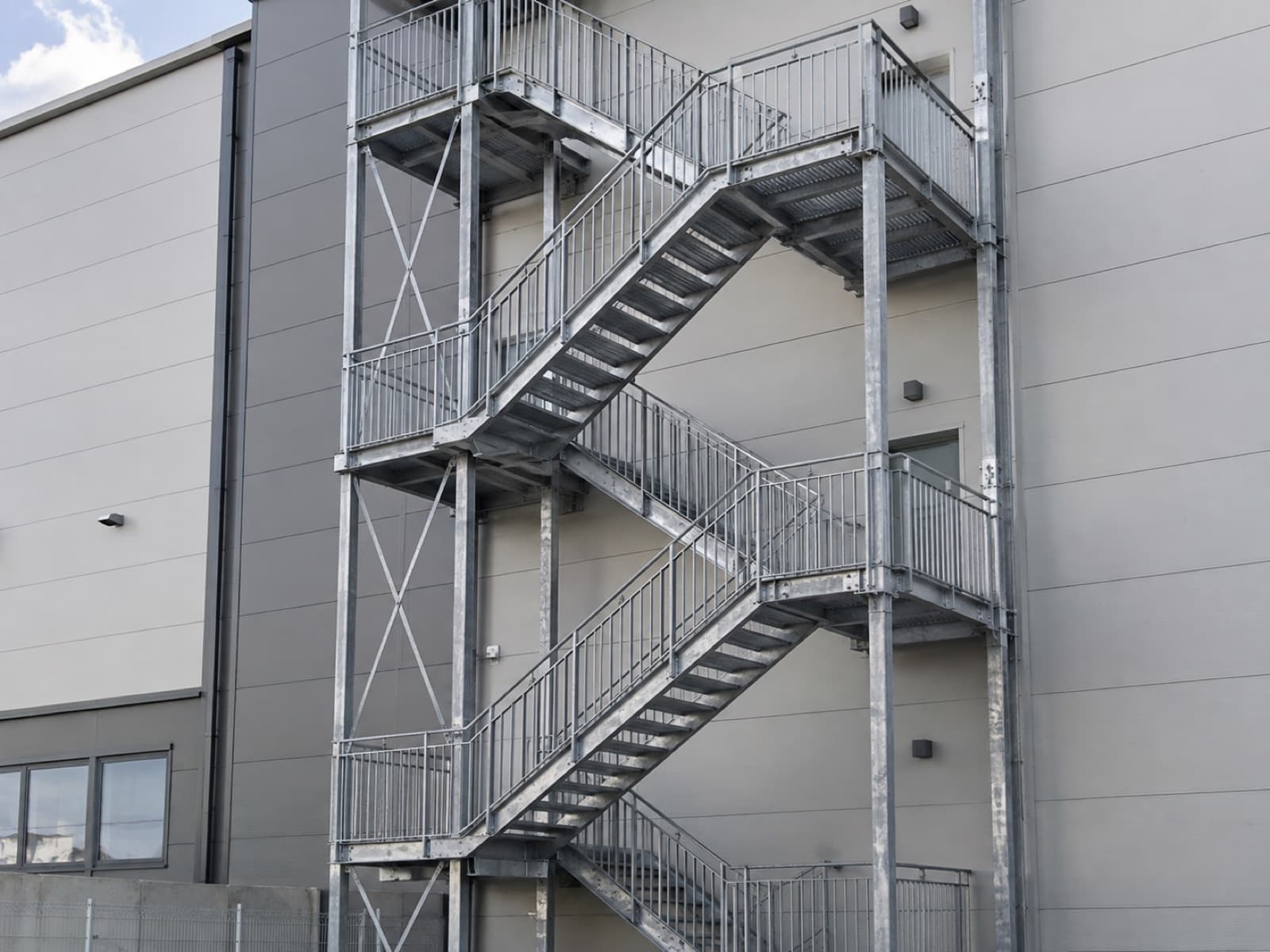
Fire Escape Stairs
External escape stairs for residential, school, factory and commercial buildings.